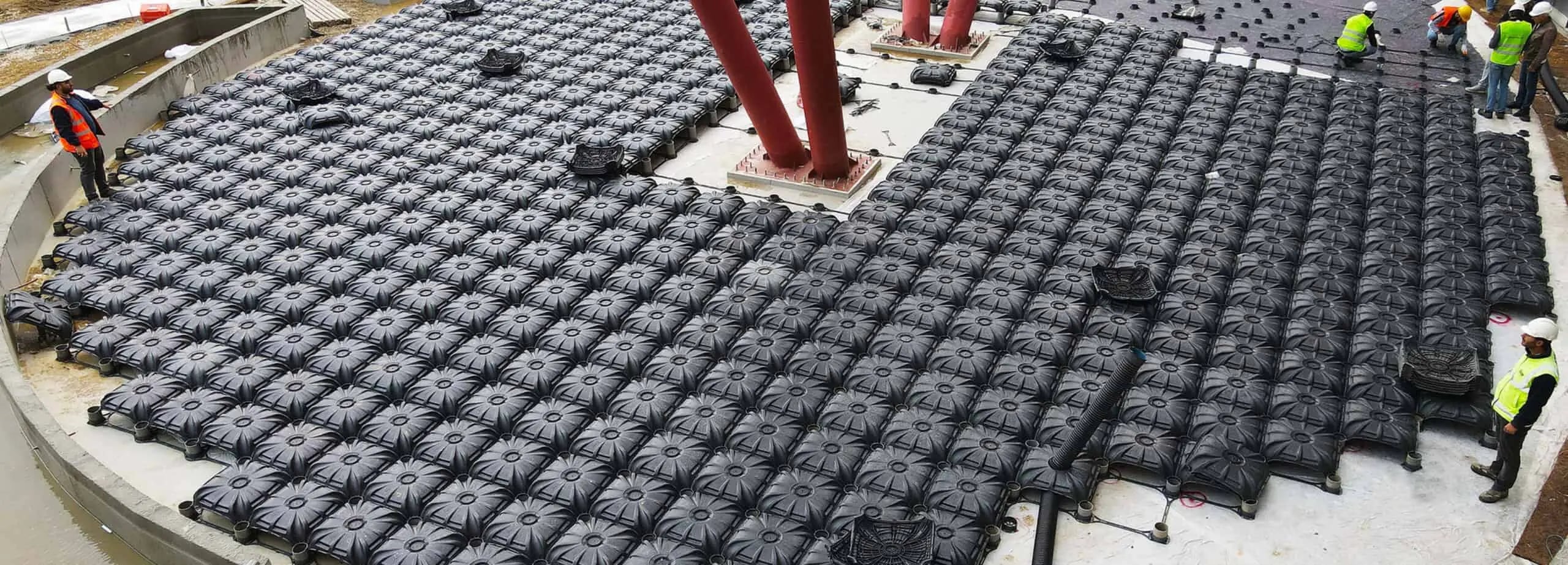
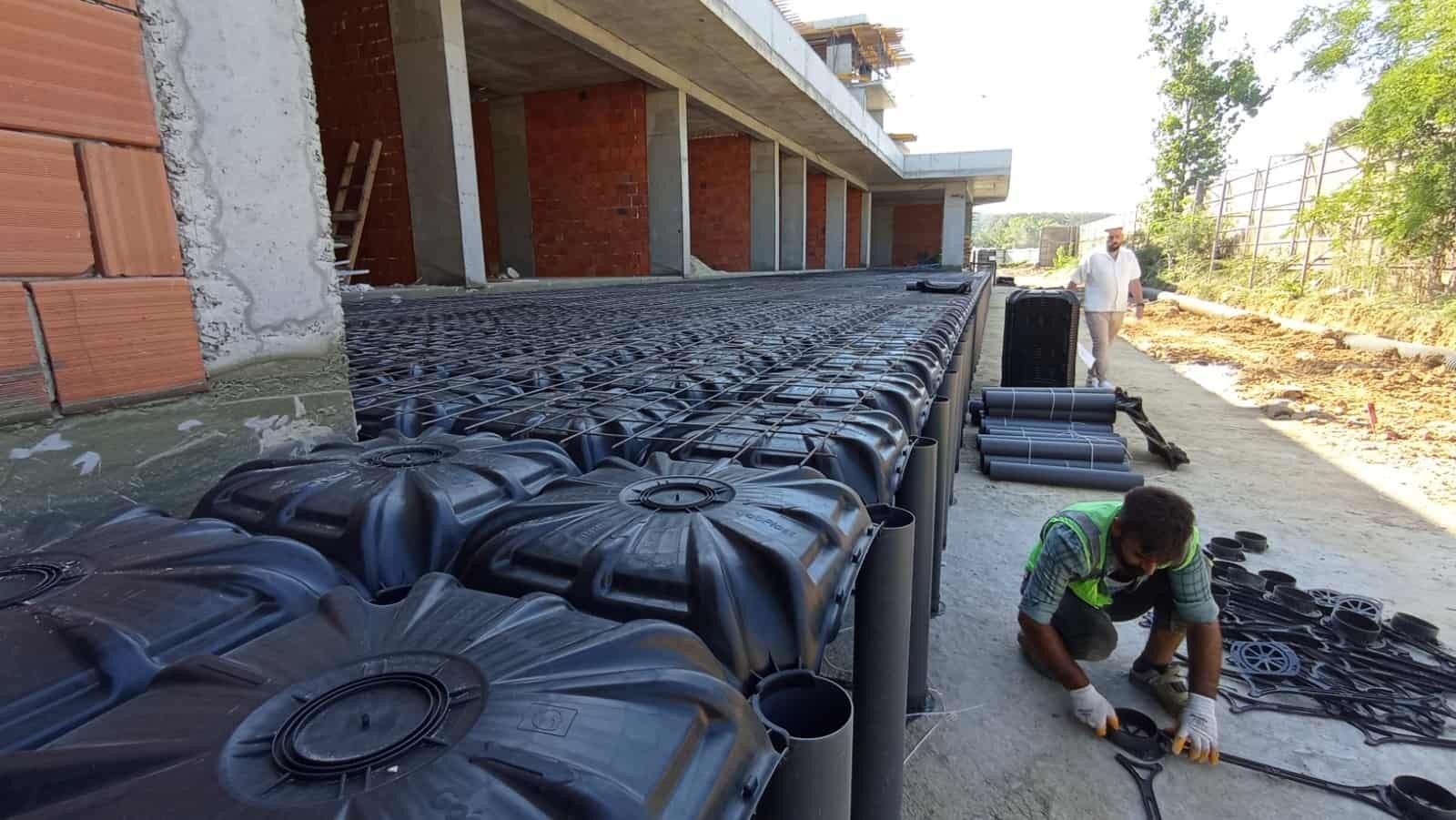
When they first hear about it, most people ask what disposable formwork is. It is a special reinforced-concrete formwork system widely used in the construction industry. Its main purpose is single-use plastic formwork that allows reinforced-concrete structures to be poured easily within a height range of 15 to 300 cm. This method increases the speed of construction projects while offering an environmentally friendly option. Disposable formwork is especially preferred when creating slab structures, fill and other structural elements.
Disposable Formwork and Radon Gas: A Historical Perspective
Disposable formwork has a long history as one of the fundamental building blocks of the construction sector. However, the importance of this system for the environment and human health began to be noticed only more recently. Cancer research carried out in Europe and America since the 1950s established that a radioactive gas called "Radon", accumulating in enclosed environments, is a factor that threatens human health.
Radon gas occurs naturally in soil and water and is generally harmless when released into the air. However, in enclosed areas — especially the ground floors of buildings and basements in contact with the soil — radon gas becomes a serious danger when trapped. It seeps into the building through cracks in concrete or walls, exposing people to the risk of cancer.
In countries such as Italy, radon values exceeding world and European averages mobilized the construction industry. This created the obligation to build foundations with ventilation, and various designs were developed for this purpose. One of these designs is the raised floor system, used particularly in the ancient Roman period. This system aims to limit radon gas entering the building by preventing the ground floors from contacting the soil.
In this historical context, GooPlast makes an important contribution to the development of raised floor systems. With raised flooring as its core idea, GooPlast offers a solution to this important need of the construction industry through recycled materials and special designs. These systems provide significant benefits in environmental sustainability, human health and energy efficiency, and help future construction projects to be carried out in a more environmentally friendly and health-conscious way.
In addition, there are similarities between the vaulted structures and disposable-formwork structures used in ancient Roman architecture and today's raised floor systems. The raised floor systems used to heat buildings and baths in the ancient Roman period aimed to eliminate the contact of ground floors with the soil. This historical background inspired the development of today's raised floor systems and became part of environmentally friendly construction practice.
In Turkey, the first studies to determine radon values began in 1984. These studies aimed to determine the distribution of radon gas across the country and to take the necessary measures to protect public health.
Technical Details of Disposable Formwork
Disposable Formwork Systems consist of a series of materials and components specially designed to offer different advantages in construction projects:
- Dome: Made of polypropylene (PP), designed with a height of 15 cm
- Foot: Made of recycled polypropylene into which Ø125 cm PVC pipes are inserted
- Strip / Guide: Strips that connect the feet perpendicularly to each other
- Pipe / Column: Made of Ø125 cm recycled PVC, ranging from 5 cm to 300 cm
Application Areas of Disposable Formwork Systems
- Base slab formation
- Floor formwork
- Fill between foundation footings
- Parking ramps
- Fill around pools
- Elevator / staircase hall fill
- Subbase construction
- Landscape fill and roof gardens
Environmental Benefits of Disposable Formwork
- Recycled Materials: Plastic Disposable Formwork Systems are made from recycled plastics. This reduces the amount of waste material and protects natural resources.
- Radon Gas Control: Plastic Disposable Formwork Systems prevent radon gas from seeping in. This improves indoor air quality and protects human health.
- Fast and Economical Installation: Disposable Formwork Systems speed up construction processes and reduce costs.
- Reduction in Labor Costs: Disposable Formwork Systems speed up construction processes and reduce labor costs.
Effects of Disposable Formwork on Human Health
Disposable Formwork Systems provide positive effects not only on the environment but also on human health:
- Radon Gas Control: Plastic Disposable Formwork Systems protect against the health problems caused by radon gas. When radon gas seeps into buildings, it can adversely affect human health through respiration. Disposable Formwork Systems prevent this gas from leaking in.
- Environmentally Friendly Materials: Disposable Formwork Systems adopt an environmentally friendly approach through the use of recycled plastics. This reduces the use of chemicals harmful to human health and promotes a sustainable lifestyle.
Disposable Formwork and LEED Certification
LEED (Leadership in Energy and Environmental Design) is a globally recognized standard for green building certification. This certificate evaluates a structure's environmental impact and energy efficiency. Disposable Formwork Systems offer a great advantage for construction projects aiming to earn LEED certification.
- Sustainable Material Use: Projects seeking LEED certification encourage the use of sustainable materials. Because Disposable Formwork Systems are made of recycled plastics, they comply with these criteria and earn points.
- Radon Gas Control: Improving indoor air quality and preventing harmful substances such as radon gas from entering buildings is important for LEED certification. Plastic Disposable Formwork Systems offer an effective solution in this regard.
- Reduction in Labor Costs: Disposable Formwork Systems speed up construction processes and reduce labor costs. This is important for achieving energy-efficiency goals.
The Future of Disposable Formwork Systems
Disposable Formwork Systems carry great potential for the future of the construction sector. In parallel with developing technology and increasing environmental awareness, these systems are continuously being improved. Moreover, Disposable Formwork Systems enable construction projects to be carried out more efficiently and in a more environmentally friendly way.
Disposable Formwork Systems for a Greener Future
Disposable Formwork Systems prioritize environmental sustainability and energy efficiency. Using these systems reduces the construction sector's negative impact on the environment. Made of recycled plastics, Disposable Formwork Systems reduce the amount of waste material and protect natural resources. They also prevent harmful substances such as radon gas from entering buildings, which protects human health.
Disposable Formwork Application Video
Conclusion
Disposable Formwork Systems represent major progress in terms of sustainability and environmental awareness in the construction sector. These systems help construction projects be completed faster, more efficiently and in a more environmentally friendly way. Thanks to their positive effects on human health and the environment, they have the potential to become one of the cornerstones of future construction projects. Disposable Formwork Systems represent an important innovation that helps the construction sector move toward a greener, more sustainable and people-friendly future. Wider use of these systems allows both the construction sector and the environment to step into a better future.
To learn more about our disposable formwork product, you can visit our Disposable Formwork Systems page.